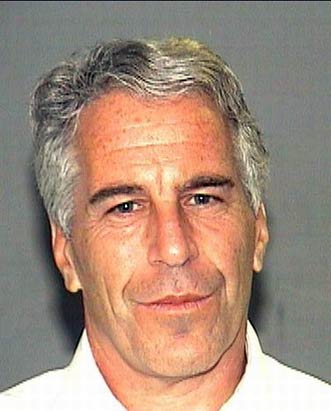
Jeffrey Epstein stands at the center of one of the most extensive criminal investigations into sex trafficking in modern American history. The government documents archived at EpsteinScan.org, totaling over 1.28 million pages, chronicle a decades-long criminal enterprise that spanned multiple jurisdictions and left hundreds of victims in its wake.
The Central Figure in a Criminal Network
Epstein appears as a named subject in 440,420 documents within the archive—a staggering volume that reflects both the scope of his criminal activities and the extensive law enforcement and legal proceedings that followed. As a financier with extensive wealth and connections, Epstein constructed a sophisticated operation that allowed him to abuse underage girls with apparent impunity for years.
The documents reveal a pattern of criminal conduct that extended across state and international boundaries. Epstein's operation was not merely opportunistic; records indicate it was methodical and sustained, involving recruitment networks, multiple properties serving as venues for abuse, and a circle of enablers who facilitated his crimes.
Two Prosecutions: Florida and New York
Epstein faced criminal consequences twice in his lifetime. The first prosecution, in Florida in 2008, resulted in what would become one of the most controversial plea agreements in federal criminal history. This Non-Prosecution Agreement (NPA) allowed Epstein to plead guilty to state charges while avoiding federal prosecution, resulting in just 13 months of incarceration in a work-release program.
The documents related to Ghislaine Maxwell's subsequent prosecution shed significant light on the legal boundaries of that NPA. According to court records, when Maxwell was prosecuted by the United States Attorney's Office for the Southern District of New York (USAO-SDNY) years later, her defense team argued that Epstein's NPA should bar her prosecution. The appellate court rejected this argument definitively.
As stated in the Second Circuit's opinion: "We hold that Epstein's NPA did not bar Maxwell's prosecution by USAO-SDNY as the NPA does not bind USAO-SDNY." This ruling clarified that the Florida agreement was limited in scope to that jurisdiction and did not provide blanket immunity to Epstein's co-conspirators in other districts.
The 2019 Federal Charges
In July 2019, Epstein was arrested again, this time on federal charges brought by USAO-SDNY. The new indictment alleged sex trafficking and conspiracy to commit sex trafficking, involving multiple underage victims between 2002 and 2005. Unlike the Florida case, these federal charges carried the possibility of decades in prison.
The 2019 prosecution represented a second chance at justice that many victims and advocates had sought for over a decade. The charges alleged a systematic pattern: Epstein would recruit underage girls, often from economically disadvantaged backgrounds, pay them for massages that turned into sexual abuse, and then recruit those same victims to bring other girls into the network. This pyramid-like recruitment structure allowed the operation to sustain itself with a steady supply of new victims.
Death in Federal Custody
On August 10, 2019, approximately one month after his arrest, Epstein was found dead in his cell at the Metropolitan Correctional Center in Manhattan. The New York City Medical Examiner ruled his death a suicide by hanging. The circumstances surrounding his death—including failures in monitoring and documentation at the facility—sparked widespread public scrutiny and numerous investigations.
Epstein's death meant he would never face trial on the 2019 federal charges. The Southern District of New York subsequently moved to dismiss the indictment, as is standard procedure when a defendant dies before trial. However, the investigation into his co-conspirators continued.
Legal Legacy and Continuing Prosecutions
While Epstein's death ended criminal proceedings against him personally, the legal proceedings examining his network have continued. Maxwell's prosecution, conviction, and sentencing demonstrated that accountability would extend beyond Epstein himself.
According to appellate documents, Maxwell was convicted on multiple counts and "principally sentenced to concurrent terms of imprisonment of 60 months, 120 months, and 240 months" for her role in the trafficking conspiracy. The Second Circuit affirmed her conviction and found her sentence "procedurally reasonable."
The court records make clear that Maxwell's crimes were inextricably linked to Epstein's operation. Her petition for certiorari to the Supreme Court sought to challenge various aspects of her prosecution and conviction, including arguments about the effect of Epstein's NPA. These efforts were unsuccessful.
The Scope of the Investigation
The sheer volume of documents mentioning Epstein—440,420 across various government agencies and proceedings—illustrates the extraordinary breadth of the investigation into his activities. These documents span:
- Criminal investigative files from multiple law enforcement agencies
- Court filings from both Florida and New York prosecutions
- Civil litigation brought by victims seeking compensation and accountability
- Congressional oversight materials examining the 2008 plea agreement
- International law enforcement cooperation records
Each document category provides a different lens through which to understand the full scope of Epstein's criminal enterprise and the institutional responses to it.
A Network, Not an Individual
While Epstein was the principal actor, the documents consistently reveal that his operation depended on a network of facilitators, employees, and associates. Pilots flew victims to his properties. Household staff maintained the locations where abuse occurred. Associates recruited new victims. Professionals managed his finances and legal affairs.
Understanding Epstein's role requires understanding this network structure. He was not a lone actor but rather the architect and primary beneficiary of a system that enabled his crimes through the participation, whether knowing or unknowing, of dozens of other individuals.
Victims and Accountability
At the heart of every document mentioning Epstein are real victims—young women, many of them minors at the time of their abuse, whose lives were fundamentally altered by their encounters with him. The government's investigation identified dozens of victims, though the true number may never be fully known.
Following Epstein's death, a victim compensation fund was established to provide financial restitution to those who came forward. While no amount of money can undo the harm inflicted, the fund represented one avenue of accountability in the absence of a criminal trial.
Conclusion
Jeffrey Epstein's appearance in nearly half a million documents in this archive reflects both the magnitude of his crimes and the complexity of bringing such cases to justice. From the controversial 2008 plea agreement to his 2019 arrest and death, his case has raised fundamental questions about wealth, power, and accountability in the American justice system.
The documents preserved in EpsteinScan.org serve as a permanent record of these events—a resource for researchers, journalists, and the public seeking to understand how such an extensive criminal operation could persist for so long, and what institutional failures allowed it to continue. While Epstein himself will never face trial for the 2019 federal charges, the investigation into his network continues, and the historical record these documents provide remains essential to ensuring such failures do not recur.
 Jeffrey Epstein