In any criminal investigation, the volume of documentary evidence associated with specific individuals often reveals their operational significance. In the Epstein case, the numbers tell a striking story: Lesley Groff, Epstein's longtime assistant, appears in 31,897 shared documents—nearly fifteen times more than Ghislaine Maxwell's 2,152 documents. This disparity is not merely statistical; it maps the administrative infrastructure that made Epstein's operation function.
The Architecture of Control: Groff's Documentary Footprint
Lesley Groff served as Jeffrey Epstein's executive assistant for approximately two decades, yet her name rarely appears in headlines. The documentary record, however, positions her as the single most-documented individual in Epstein's network after Epstein himself. This massive documentary presence—31,897 shared files—reflects a reality investigators have long understood: criminal enterprises require administrative architecture.
Documents show Groff managed Epstein's schedule, coordinated travel, handled communications, and maintained organizational systems across his properties. Her role was not peripheral but central to operational continuity. Where Maxwell's documented presence often relates to specific incidents, allegations, and witness testimony, Groff's footprint spans the mundane-but-essential: calendars, booking confirmations, phone logs, financial records, and correspondence.
This distinction is critical. Maxwell's 2,152 documents frequently concern allegations of direct participation in recruiting and abuse. Groff's 31,897 documents map something different: the bureaucratic machinery that kept Epstein's schedule running, his properties staffed, his aircraft flying, and his communications flowing.
The Pilot and the Assistant: 2,230 Documents of Operational Coordination
The relationship between Lesley Groff and pilot Larry Visoski generates 2,230 shared documents, the second-highest connection in Groff's network after Epstein himself. This pairing reveals the operational nexus between administrative coordination and logistics execution.
Visoski piloted Epstein's aircraft for decades, maintaining flight logs that have become central evidence in the investigation. Records indicate that travel coordination required constant communication between Groff's office and Visoski's cockpit. Passenger manifests, flight schedules, customs documentation, and ground transportation arrangements all required coordination between these two nodes.
The 2,230 shared documents likely include flight requests, passenger lists, scheduling changes, and logistical confirmations. This documentary overlap illustrates how Epstein's operation depended on synchronized administrative and transportation systems. Visoski couldn't fly without Groff's scheduling; Groff couldn't execute Epstein's calendar without Visoski's availability.
Court testimony from multiple witnesses describes how seamlessly Epstein's travel operated—victims and associates alike were moved between New York, Palm Beach, New Mexico, Paris, and the Caribbean with minimal friction. That seamlessness required infrastructure, and the Groff-Visoski documentary connection quantifies it.
Boris Nikolic: 2,073 Documents of Professional Networks
Dr. Boris Nikolic's appearance with 2,073 shared documents introduces a different network dimension. A physician and venture capitalist who advised Bill Gates and served as chief advisor to Gates on science and technology philanthropy, Nikolic represents Epstein's cultivation of elite professional relationships.
Nikolic was named as a successor executor in Epstein's will, drafted just two days before Epstein's death—a designation Nikolic immediately declined, stating he was "shocked" by the appointment. The 2,073 documents associated with Nikolic likely span years of professional interactions, meeting schedules, correspondence, and possibly financial or investment-related records.
This connection illustrates Epstein's strategy of embedding himself within networks of scientific, technological, and philanthropic influence. Documents show Epstein donated to various scientific institutions and positioned himself as a patron of research and innovation. Nikolic's legitimate credentials provided Epstein with access to circles that might otherwise have remained closed.
The documentary volume suggests sustained interaction over time—not merely occasional contact but ongoing professional relationship maintenance. Whether these documents reveal how deeply Nikolic understood Epstein's activities remains a key investigative question.
The Jane Doe Files: 1,836 Documents of Victimization
The presence of 1,836 documents associated with Jane Doe—a pseudonym used to protect victim identities—provides a sobering counterpoint to the operational and professional connections. These files likely include witness statements, deposition transcripts, victim compensation claims, protective orders, and evidentiary submissions.
The specific Jane Doe referenced here could be any of several women who came forward under seal. The documentary volume indicates substantial investigative and legal engagement: detailed testimony, corroborating evidence, legal filings, and potentially years of case development.
This document count underscores that behind the administrative calendars and flight logs are real victims whose experiences generated extensive legal and investigative records. The Jane Doe files represent the human cost that administrative efficiency was designed to facilitate and conceal.
Network Patterns: What the Numbers Reveal
Analyzing these relationships together reveals distinct organizational layers:
- Administrative Core (Groff, 31,897 docs): The operational center managing daily functions, communications, and scheduling
- Logistics Layer (Visoski, 2,230 docs with Groff): Transportation and movement enabling geographic flexibility
- Strategic Layer (Maxwell, 2,152 docs): Recruitment, social facilitation, and allegedly direct participation in abuse
- Professional Network (Nikolic, 2,073 docs): Elite connections providing legitimacy and access
- Victim Layer (Jane Doe, 1,836 docs): The individuals targeted and harmed by the operation
The disparity in document volumes is instructive. Groff's administrative role generated fifteen times more records than Maxwell's more notorious involvement. This reflects a basic reality of criminal operations: the spectacular requires the mundane. Abuse and trafficking required calendars, bookings, phone calls, and coordination.
The Significance of Administrative Evidence
Prosecutors have long understood that administrative records can be more damning than dramatic testimony. Calendars don't lie. Flight logs establish presence. Email timestamps prove communication. Financial records trace payments.
Groff's 31,897 documents represent a prosecutorial goldmine precisely because they're routine. They establish patterns, prove knowledge, demonstrate coordination, and create timelines that witnesses might forget but documents preserve. When victims testify about being at a specific location on a specific date, Groff's calendars and Visoski's flight logs can provide corroboration.
This administrative layer also poses difficult questions about culpability and knowledge. How much did Groff know? When did she know it? What did routine booking requests reveal or conceal? These questions remain central to understanding how Epstein's operation functioned with such apparent efficiency for so long.
Conclusion: Reading the Documentary Map
The network revealed by document counts illustrates that Epstein's operation was neither improvised nor chaotic. It was administered, coordinated, and maintained through layers of professional infrastructure. Groff's unprecedented documentary presence—nearly 32,000 files—maps the bureaucratic reality behind the criminal activity.
As investigators and journalists continue analyzing the Epstein archive, the administrative records may prove as revealing as the sensational. In the intersections between Groff's calendars, Visoski's flight logs, Nikolic's professional correspondence, and Jane Doe's testimony, the full scope of Epstein's operation becomes documentable, provable, and prosecutable.
The numbers tell a story: 31,897 documents of administration, 2,230 of logistics coordination, 2,152 of alleged facilitation, 2,073 of elite access, and 1,836 of victimization. Together, they map an operation that required infrastructure to sustain itself—and left a documentary trail vast enough that we're still reading it.
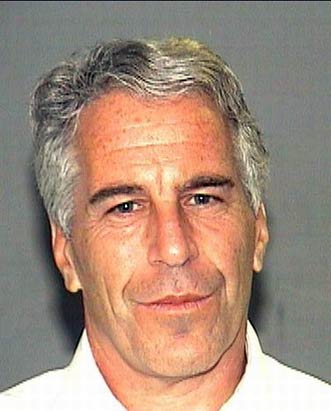 Jeffrey Epstein
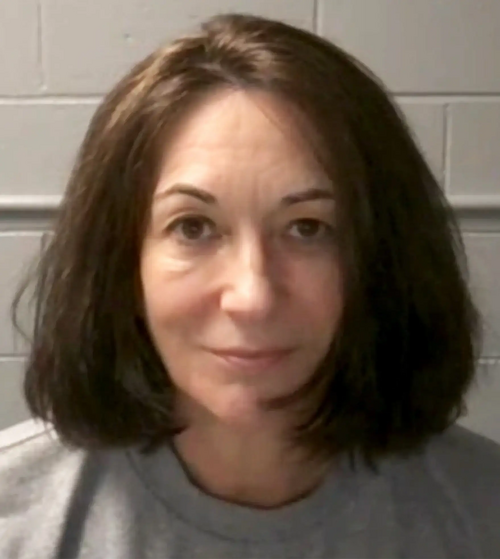 Ghislaine Maxwell