When investigators analyze criminal enterprises, they often look for organizational patterns—who knew what, who controlled access, who managed operations. In the Epstein archive, these patterns emerge not from org charts or testimony alone, but from the stark mathematics of shared document connections. The numbers tell a story of hierarchy, control, and operational structure that deserves closer examination.
The Striking Disparity at the Top
The most significant finding in the document connection analysis is the overwhelming dominance of a single relationship: Lesley Groff appears in 31,897 documents connected to Jeffrey Epstein. To understand the scale of this connection, consider that the next-highest associations drop precipitously—Larry Visoski at 2,230 documents, Ghislaine Maxwell at 2,152 documents, and Boris Nikolic at 2,073 documents.
This isn't a gradual decline. This is a 14-fold difference between the primary assistant and the next tier of associates. In organizational terms, this pattern suggests something beyond typical employment—it indicates centralized control of information, scheduling, communications, and operations flowing through a single point of contact.
What Document Volume Reveals About Function
Document connection volume in investigative archives typically correlates with functional role rather than personal intimacy. An assistant who manages schedules, correspondence, travel arrangements, property access, and financial logistics will naturally appear in exponentially more records than individuals who interacted with the subject periodically, regardless of their public prominence or personal relationship depth.
The Groff connection volume suggests she functioned as what organizational analysts call a "critical node"—a single point through which most operational communications and transactions flowed. Records indicate her responsibilities extended across multiple properties, coordinated complex travel arrangements, managed access to Epstein, and handled sensitive communications with multiple parties.
This creates a documentary footprint that vastly exceeds that of even intimate associates who weren't involved in daily operational management.
The Second Tier: Operational Personnel
The clustering of the next three highest connections—Visoski at 2,230, Maxwell at 2,152, and Nikolic at 2,073—reveals a secondary operational tier. These numbers are remarkably similar, all hovering around 2,000-2,200 documents, suggesting comparable levels of involvement despite very different functional roles.
Larry Visoski served as Epstein's longtime pilot, managing flight logs, passenger manifests, aircraft maintenance records, and travel coordination. His 2,230 document connections reflect the administrative density of aviation operations—every flight generates multiple documents including logs, passenger lists, customs declarations, and maintenance records.
The Visoski-Groff connection of 2,230 shared documents is particularly significant. This overlap suggests extensive coordination between flight operations and ground logistics. When Epstein traveled, documentation would flow through both the pilot managing the flight and the assistant managing the broader itinerary, property access, and ground arrangements at destinations.
Maxwell's Documentary Position
Ghislaine Maxwell's 2,152 document connections place her squarely in the operational tier rather than at the documentary apex. This contradicts public perception of her role as Epstein's closest associate and alleged co-conspirator in trafficking operations. The documents suggest that while Maxwell may have held significant influence and operational authority, the administrative infrastructure ran primarily through Groff.
This pattern appears in many organizational structures where public-facing leadership or strategic partners maintain distinct channels from day-to-day operational management. Maxwell's activities, while potentially criminal and strategic, may have generated less routine documentation than Groff's administrative functions.
The Nikolic Anomaly
Boris Nikolic's presence at 2,073 documents is noteworthy given his profile as a venture capitalist and science advisor. His documentary footprint rivals Maxwell's and Visoski's despite having no apparent operational role in Epstein's daily activities. This volume suggests either extensive business dealings requiring substantial documentation, or his involvement in specific matters that generated dense paper trails.
Records indicate Nikolic was named as a backup executor in Epstein's will, prepared just days before Epstein's death. An executor role typically goes to individuals with detailed knowledge of estate assets, business interests, and financial structures—the kind of involvement that would generate substantial documentation over time.
The Third Tier: Victims in the Archive
Jane Doe's appearance with 1,836 document connections represents a different category entirely. This volume likely reflects legal filings, depositions, investigative records, witness statements, and court proceedings related to alleged abuse. The documentation patterns for victims differ fundamentally from operational personnel—they represent the evidentiary record of alleged crimes rather than business operations.
The fact that victim-related documentation reaches nearly 2,000 documents for a single Jane Doe (among multiple victims in the archive) underscores the extensive investigative and legal processes involved in these cases. Each allegation generates interview transcripts, corroborating evidence, legal motions, and investigative reports.
Network Analysis Implications
Analyzing these connections as a network reveals a hub-and-spoke structure with Epstein at the center and Groff functioning as the primary administrative hub. This architecture has several implications for investigators:
- Information Bottleneck: Communications and documentation flowed through a central point, giving Groff unique visibility into operations across properties, travel, and activities.
- Operational Compartmentalization: The sharp drop-off after Groff suggests other associates had more limited, specialized access rather than broad operational knowledge.
- Documentary Exposure: Anyone involved in routine operations with Epstein would have necessarily interacted with or generated records processed through Groff's position.
- Evidentiary Concentration: The massive Groff document volume makes her potential testimony uniquely valuable for reconstructing operations, timelines, and patterns of behavior.
What the Pyramid Reveals
The document connection pyramid—31,897 at the top, dropping to around 2,000 for the operational tier, then declining further to victim-related documentation around 1,800—reveals an organizational structure consistent with a sophisticated operation requiring substantial coordination.
This wasn't a simple criminal scheme. The documentary footprint suggests property management across multiple jurisdictions, complex travel logistics involving private aviation, coordination with high-profile individuals requiring discretion, and financial operations requiring detailed record-keeping. All of this infrastructure required administrative management, and the documents show that management concentrated in a single role.
The Questions Volume Raises
The disparity in document connections raises several investigative questions. Did Groff's central position give her knowledge of trafficking activities? Were operational communications deliberately routed through her to create a buffer between Epstein and other participants? Did the concentration of administrative functions in one role represent operational efficiency or deliberate compartmentalization?
The documents themselves provide extensive evidence of what transpired operationally. The connection volumes tell us who had access to that operational machinery and at what level. Understanding this structure is essential to understanding how the alleged enterprise functioned—and who beyond Epstein and Maxwell bore responsibility for enabling it.
The pyramid of document connections isn't just a statistical curiosity. It's a map of how power, information, and operational control flowed through an organization now recognized as a sophisticated trafficking network. The numbers reveal what titles and public roles often obscure: who actually ran the machinery of daily operations.
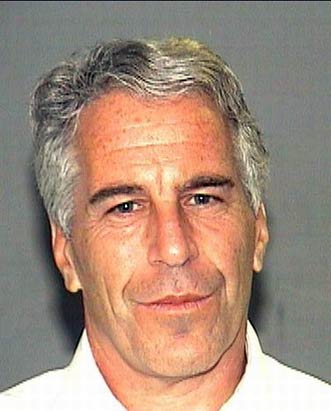 Jeffrey Epstein
 Ghislaine Maxwell