Among the international figures in Jeffrey Epstein's network, few had a more specialized and disturbing alleged role than Jean-Luc Brunel. The French modeling agent appears in 4,485 documents in the Epstein archive—a volume that reflects not just frequent contact, but a systematized relationship that allegedly served as a pipeline for young women and girls into Epstein's trafficking operation.
The Modeling Industry Gateway
Brunel operated at the intersection of two worlds: the glamorous international modeling industry and Epstein's predatory network. Through his agencies MC2 Models and the earlier Karin Models, he allegedly controlled access to young women seeking modeling careers—a vulnerability he is accused of exploiting to supply victims to Epstein.
The sheer number of documents mentioning Brunel—4,485—places him among the most frequently referenced individuals in the entire archive. This isn't merely social contact. Records indicate a business-like relationship where Brunel allegedly functioned as a recruiter, using the promise of modeling opportunities as bait for young women, some underage, who would then be trafficked to Epstein and others in his circle.
Virginia Giuffre's Accusations
Virginia Giuffre, one of Epstein's most prominent accusers, directly named Brunel in her allegations. According to her testimony, Brunel didn't merely introduce young women to Epstein—he participated in the abuse himself. Giuffre accused him of rape, describing a pattern where he would identify vulnerable young women through his modeling agencies and deliver them into situations of sexual exploitation.
Document references show that Brunel's name appears in contexts discussing recruitment patterns and international travel. The modeling industry provided perfect cover: young women from Europe, South America, and elsewhere could be brought to the United States under the guise of modeling opportunities, with MC2 Models providing legitimate-looking documentation and purpose for their travel.
The MC2 Models Operation
MC2 Models wasn't just another modeling agency—documents suggest it was financially supported by Epstein himself. This financial entanglement meant that Brunel's business interests were directly aligned with providing access to young women for Epstein's network. The agency had offices in New York and other locations, creating an international infrastructure for what prosecutors would later characterize as trafficking.
The business model was insidious: promise young women from less privileged backgrounds the dream of modeling success in America, arrange their visas and travel, and then place them in situations where they became vulnerable to exploitation. Some women were allegedly housed in Epstein-funded apartments, creating financial dependence that made escape difficult.
Flight to Justice and Death in Custody
For years, Brunel remained beyond the reach of U.S. authorities in France. But as the Epstein scandal continued to unfold after Epstein's 2019 death, pressure mounted for accountability. In December 2020, French authorities arrested Brunel at Charles de Gaulle Airport as he attempted to board a flight to Senegal—an apparent attempt to flee to a country without extradition to the United States.
He was charged in France with rape of minors and human trafficking in connection with the Epstein case. He denied all allegations, but remained in pretrial detention at the La Santé prison in Paris. Then, in February 2022, guards found him hanged in his cell. French authorities ruled it suicide.
His death, like Epstein's before him, eliminated the possibility of his testimony. Questions about the extent of his knowledge of the broader network, his business arrangements with Epstein, and the full scope of his alleged recruitment activities went unanswered.
The International Dimension
Documents mentioning Brunel often appear in contexts involving international connections—particularly between the United States and France. References in Maxwell's bail documents, as seen in DOJ-OGR-00001199 and DOJ-OGR-00002220, note arguments about flight risk to countries "other than the United Kingdom and France," suggesting prosecutors viewed France as a particular concern for potential flight by defendants in the case.
This makes sense given Brunel's position as a French national with deep connections in Paris's fashion industry. France's different legal standards for extradition and prosecution of sexual crimes created a potential safe harbor for individuals connected to the Epstein network—at least until international pressure forced action.
The Modeling Industry's Dark Side
Brunel's case illuminates a darker truth about the modeling industry's historical vulnerabilities. For decades, young women—often from economically disadvantaged backgrounds in Eastern Europe, South America, and elsewhere—have been promised opportunities in Western fashion capitals. The power dynamics are stark: agents control access to work, housing, and legal status through visa arrangements.
Former models have described encountering Brunel at parties and events in Paris and New York throughout the 1980s and 1990s, with some alleging inappropriate behavior long before the Epstein connections became public. Industry insiders reportedly knew about concerning patterns, but the glamour and financial success of his agencies provided protective cover.
The Unanswered Questions
With 4,485 document mentions, Brunel's archive presence suggests a sustained, systematic involvement in Epstein's operations spanning years or even decades. Yet his death means many questions remain unanswered: How many women were recruited through his agencies? What financial arrangements existed between Epstein and MC2? Who else knew about or benefited from this pipeline?
Documents suggest that Brunel's relationship with Epstein wasn't occasional or incidental—it was a core operational element. The volume of references implies regular communication, coordination, and activity. Each document mention potentially represents another trip, another young woman recruited, another instance of alleged exploitation.
Legacy of a Pipeline
Jean-Luc Brunel's story represents more than one individual's alleged crimes. It reveals how existing industries and institutional structures—in this case, the international modeling business—can be weaponized for trafficking purposes. The legitimate infrastructure of a modeling agency provided cover, logistics, and access that would have been far more difficult to arrange through purely criminal means.
His 4,485 mentions in the document archive stand as testimony to a systematized relationship that allegedly funneled vulnerable young women into situations of exploitation. That he died before facing full accountability in court means the complete truth of his role may never be fully established. But the documentary evidence suggests he was far more than a peripheral figure—he was allegedly a key operational component of Epstein's international trafficking network.
The archive mentions of Jean-Luc Brunel serve as a reminder that trafficking networks rarely operate through a single individual. They require infrastructure, international reach, and the corruption of legitimate industries. In Brunel's case, documents indicate that corruption allegedly took the form of a modeling agency that promised dreams while delivering nightmares.
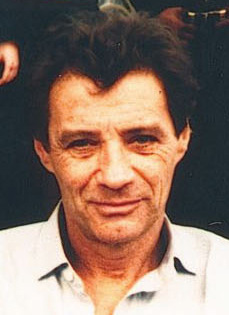 Jean-Luc Brunel