When Jeffrey Epstein updated his will two days before his death in August 2019, he named Boris Nikolic as a backup executor. Nikolic, a prominent venture capitalist and former science advisor to Bill Gates, immediately declined the role and expressed shock. "I was not consulted," he said through a spokesperson.
The documents tell a different story. Records show Nikolic shares 2,073 documents with Epstein, making him the fourth-most connected person in the entire archive. Only Lesley Groff (31,897), Larry Visoski (2,230), and Ghislaine Maxwell (2,152) appear more frequently. That places a scientist and venture capitalist in the same documentary tier as Epstein's personal assistant, private pilot, and alleged co-conspirator.
What 2,073 Documents Actually Means
Document frequency reveals organizational proximity. When two people share thousands of documents, they weren't casual acquaintances exchanging holiday cards. They were in regular, substantive communication about ongoing matters requiring documentation, coordination, and follow-up.
Nikolic's document count exceeds many people who spent physical time at Epstein properties. It exceeds lawyers who represented him. It exceeds financial advisors who managed his money. The number suggests sustained involvement in Epstein's professional activities over an extended period.
For context, Jane Doe, an alleged victim whose case generated substantial legal paperwork, shares 1,836 documents with Epstein. Nikolic's count is 237 documents higher. The comparison isn't meant to equate their relationships, but to illustrate scale. Someone appearing in 2,073 documents wasn't peripheral to Epstein's world.
The Bill Gates Connection
Nikolic worked as science advisor to Bill Gates from 2001 to 2014 at the Bill & Melinda Gates Foundation. During this period, he helped direct the foundation's scientific investments and strategy. After leaving the foundation, he founded his own venture capital firm focused on life sciences and technology.
Documents indicate Epstein and Gates met multiple times beginning in 2011. Gates has acknowledged these meetings while insisting they focused on philanthropy. Nikolic would have been Gates' science advisor during the early years of this relationship.
The chronology matters. Epstein's 2008 conviction for soliciting prostitution from a minor was public knowledge. His status as a registered sex offender was not hidden. Yet relationships with prominent scientists and philanthropists continued and in some cases deepened during this period.
The MIT Media Lab Pattern
Nikolic served on the advisory board of MIT's Media Lab, which accepted donations from Epstein and allowed him unusual access to researchers and facilities. Internal emails revealed that Media Lab director Joi Ito worked to conceal Epstein's involvement while seeking his money and connections.
The MIT relationship shows how Epstein used science philanthropy as social currency. He offered introductions, funding, and access to researchers seeking grants. In return, he gained association with prestigious institutions and accomplished scientists who provided credibility.
Nikolic's position at the intersection of Gates Foundation money, venture capital networks, and MIT research made him valuable to someone building influence in scientific circles. The 2,073 shared documents suggest this wasn't a one-way relationship where Epstein simply attended events or made donations. The volume indicates active coordination.
The Executor Question
Why would Epstein name someone as estate executor who claims they were never consulted? Two possibilities exist. Either Nikolic is telling the truth and Epstein made the designation without permission, or their relationship was close enough that Epstein believed Nikolic would accept the role.
The document count supports either interpretation but adds context to both. If Epstein acted unilaterally, he chose someone he'd worked with extensively over many years, someone who appeared in thousands of documents related to his activities. If Nikolic knew about the designation in advance, his public shock becomes harder to reconcile with the documentary evidence of sustained connection.
Estate executors typically need deep knowledge of assets, relationships, and obligations. The role requires trust and familiarity with the deceased's affairs. Epstein had lawyers and financial advisors who could have served this function. Instead, he chose a scientist and venture capitalist whose name appears in 2,073 documents.
The Network Position
Nikolic's document count places him in the inner operational ring of Epstein's network, but in a different category than Groff, Visoski, and Maxwell. Those three managed daily logistics: scheduling flights, coordinating staff, arranging activities. Nikolic's role appears to have been strategic rather than operational.
He provided access to scientific networks, credibility with research institutions, and connections to philanthropic money. This made him valuable in ways that complemented rather than duplicated the roles of assistants and pilots. The document volume suggests he was consulted, informed, and involved in matters requiring his specific expertise and connections.
What the Documents Don't Show
The archive doesn't prove Nikolic knew about or participated in Epstein's criminal activities. Document frequency indicates professional connection and sustained communication, not criminal knowledge or intent. Many people who appear frequently in the documents were legitimately involved in legal business, scientific philanthropy, or financial management.
What the documents do show is that Nikolic's relationship with Epstein was far more substantial than his public statements suggested. You don't appear in 2,073 documents with someone through brief acquaintance or occasional meetings. That volume indicates years of ongoing coordination about matters significant enough to generate extensive documentation.
The Unanswered Questions
The documents raise questions that haven't been publicly answered. What was the nature of the coordination that generated 2,073 shared documents? What period do these documents cover? Did the relationship continue after Epstein's 2008 conviction? What role did Nikolic play in connecting Epstein to scientific institutions and researchers?
The executor designation, made days before Epstein's death, suggests Epstein believed their relationship was strong enough and Nikolic's knowledge of his affairs deep enough to manage his estate. Whether that belief was justified or delusional, the 2,073 documents indicate it wasn't based on casual acquaintance.
In a case where so much remains hidden behind redactions and sealed documents, sometimes the clearest evidence is the simplest: how many times two people's names appear together in official records. For Boris Nikolic and Jeffrey Epstein, that number is 2,073. The documents don't explain what all that communication was about. But they make clear it was substantial, sustained, and significant enough to place a scientist in the inner circle of one of the most notorious criminal networks in recent history.
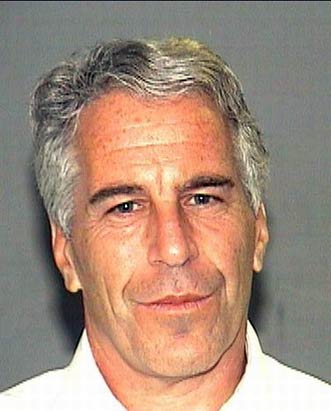 Jeffrey Epstein
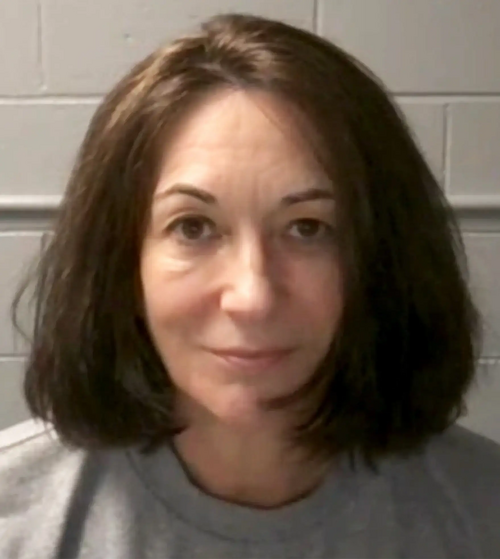 Ghislaine Maxwell