Jean-Luc Brunel appears in 4,485 documents in the Epstein archive. That volume places him among the most frequently mentioned individuals in the entire collection. Yet his name often surfaces in legal arguments rather than direct evidence, referenced as part of the broader network that allegedly enabled Jeffrey Epstein's crimes.
Brunel ran modeling agencies. First Karin Models, then MC2, which Epstein reportedly helped finance. The business model was straightforward on paper: scout young women internationally, bring them to New York, place them with fashion clients. Virginia Giuffre's allegations suggested a darker purpose. She claimed Brunel used these agencies to identify and deliver young women to Epstein, and that Brunel himself raped her.
The Government's Argument
Documents from the Ghislaine Maxwell case show prosecutors used Brunel's foreign connections as evidence of flight risk. Multiple filings reference the same concern: Maxwell could flee "to some country other than the United Kingdom and France." The phrasing appears across documents 1200, 2222, and 20100, suggesting this argument formed a core part of the government's detention strategy.
The repetition is telling. France matters in these documents not just as a jurisdiction, but as a network hub. Brunel lived in Paris. His modeling agencies operated internationally. The government's position implied that Maxwell maintained ties to this network, ties that could facilitate escape.
The Modeling Agency Structure
MC2 Models operated with Epstein's financial backing. The arrangement gave Brunel access to capital and Epstein access to young models. Court documents describe how the agency recruited internationally, particularly from Eastern Europe and South America. Young women arrived in the United States on promises of modeling careers.
Several women testified that Brunel transported them to Epstein's properties. The pattern matched a broader network structure: different individuals handling different functions, each with plausible deniability about the system's full purpose.
Brunel's agencies provided legitimate services. Models did get placed with real clients. That legitimacy created cover. It made questions harder to ask and allegations easier to dismiss.
The Paris Arrest
French authorities arrested Brunel at Charles de Gaulle Airport in December 2020. He was attempting to board a flight to Senegal. The timing came more than a year after Epstein's death and months after Maxwell's arrest. Prosecutors in France charged him with rape of minors and trafficking.
He denied all allegations. His lawyers argued the accusations stemmed from a coordinated campaign to destroy his reputation. He remained in pretrial detention at La Santé prison in Paris.
The Jail Cell Death
Guards found Brunel hanged in his cell on February 19, 2022. He was 76. French authorities ruled it suicide. The circumstances immediately drew comparisons to Epstein's death in a Manhattan jail cell in August 2019.
Both men died before trial. Both deaths occurred in custody while they faced sex trafficking charges. Both eliminated the possibility of testimony that might have implicated others or revealed operational details of the alleged network.
Lawyers for Brunel's accusers expressed frustration. They had waited years for the chance to confront him in court. His death foreclosed that possibility. It also ended the French criminal investigation into his alleged crimes.
Document Frequency and Legal Strategy
The 4,485 documents mentioning Brunel span different categories. Many are court filings in the Maxwell case. Others include FBI investigation materials. Some contain direct allegations from victims. Others reference him in the context of Epstein's broader network.
Document 33326 mentions a "dream journal" that a plaintiff maintained regarding her thoughts and memories. This suggests victims documented their experiences contemporaneously, creating records that later became evidence. The mention appears in the context of establishing what evidence existed and when it was created.
Document 33385 references how information about Brunel "circulated those along with book chapters to numerous individuals associated with publishing and the media." This points to how allegations against Brunel spread through journalistic and legal channels before criminal charges were filed.
The French Investigation
French prosecutors built their case differently than American authorities. They focused on crimes committed on French soil and against French citizens. Multiple women came forward with allegations spanning decades.
The investigation revealed that complaints about Brunel's behavior dated back to the 1980s. Former models described a pattern: offers of career advancement, pressure to attend parties, situations that became threatening.
None of those earlier complaints resulted in charges. Brunel continued operating his agencies. The business continued bringing young women to Paris and New York.
The Network Question
Brunel's role highlights a key question in the Epstein case: how did the network actually function? If allegations are true, Brunel didn't work alone. He had staff at his agencies. He coordinated travel. He connected people across jurisdictions.
The modeling industry provided infrastructure. Agencies routinely arrange international travel for young women. They maintain relationships with clients. They operate on both sides of the Atlantic. These normal business practices could mask criminal activity.
Brunel's death means certain questions will never be answered in court. Who else knew what he was allegedly doing? How many women were affected? What financial arrangements supported the operation?
The Archive's Testimony
The document count tells its own story. 4,485 mentions means Brunel's name appears in connection with nearly every major aspect of the case. Flight logs, witness statements, financial records, legal arguments.
He appears frequently enough to be central, but the nature of his appearances varies. Sometimes he's the subject. Sometimes he's referenced to establish someone else's connection to Epstein. Sometimes he's mentioned to show the scope of the alleged network.
This frequency makes his absence from trial particularly significant. The government clearly saw him as important. His alleged victims wanted him held accountable. His death prevented both outcomes.
The documents remain. They show the shape of allegations, the structure of legal arguments, the scope of investigation. They cannot replace testimony. They cannot answer cross-examination. But they preserve the record of what investigators believed they could prove.
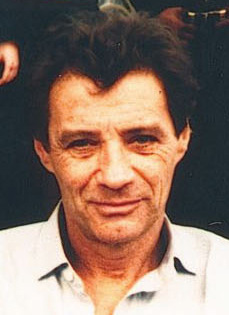 Jean-Luc Brunel