HOUSE_OVERSIGHT_012082.jpg
Extracted Text (OCR)
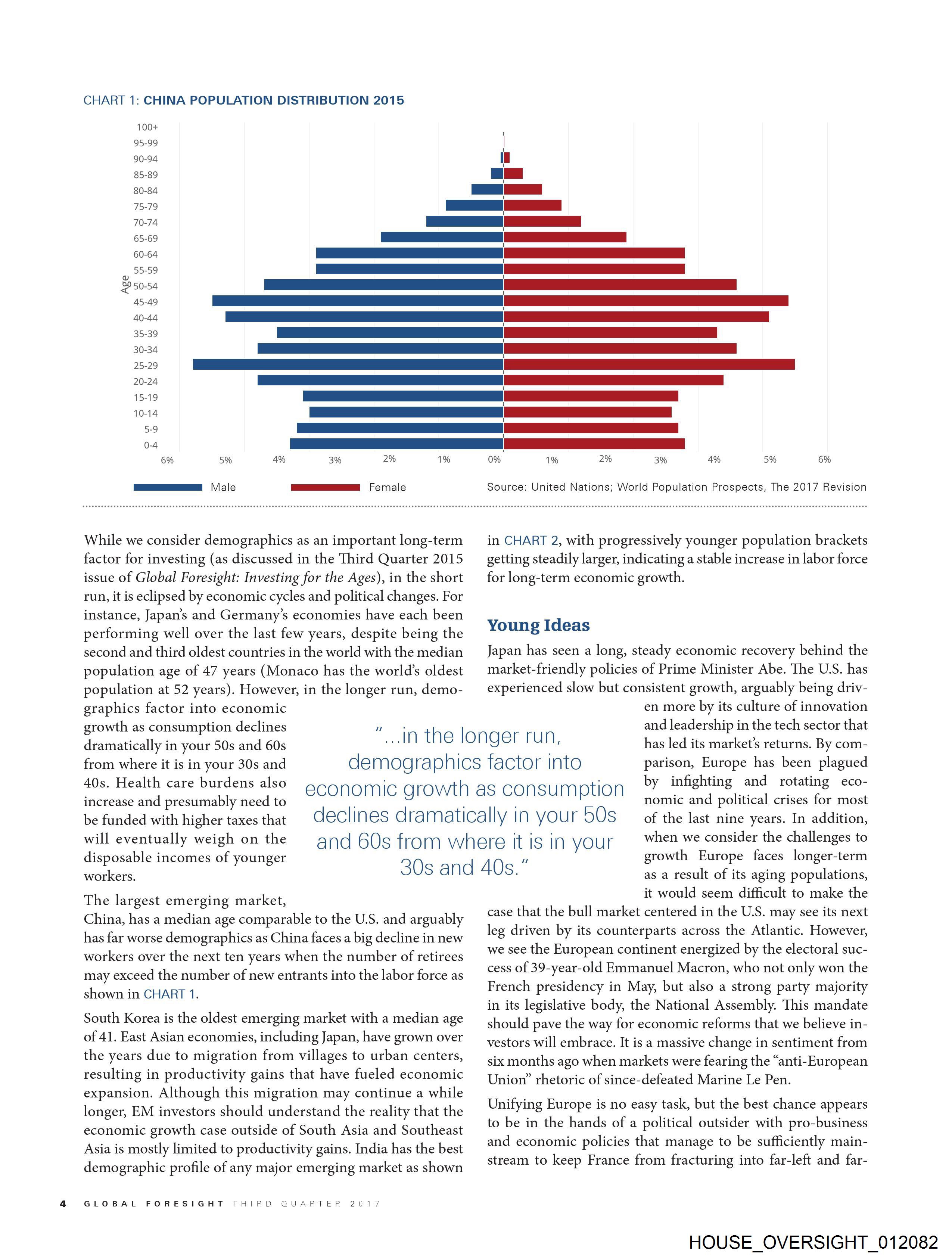
CHART 1: CHINA POPULATION DISTRIBUTION 2015
100+ ;
95-99 |
90-94 it
85-89 OE
80-84 eee ee
75-79 | |
70-74 a
65-69 EE
60-64 ee
y ed a
2950-54 NN EE—E>E=—E—E—E—E—Ee
45-49 ——_ee
40-44 Le
35-39 NN EE—E—E—E—E—E—E
30-34 CONE —————e——~E TE
25-29 _ eS ee
20-24 EEE
15-19 (I
10-14 aaa
5-9 EEE
0-4 (Ee
6% 5% 4% 3% 2% 1% 0% 1% 2% 3% 4% 5% 6%
While we consider demographics as an important long-term
factor for investing (as discussed in the Third Quarter 2015
issue of Global Foresight: Investing for the Ages), in the short
run, it is eclipsed by economic cycles and political changes. For
instance, Japan’s and Germany’s economies have each been
performing well over the last few years, despite being the
second and third oldest countries in the world with the median
population age of 47 years (Monaco has the world’s oldest
population at 52 years). However, in the longer run, demo-
graphics factor into economic
growth as consumption declines
dramatically in your 50s and 60s
from where it is in your 30s and
40s. Health care burdens also
increase and presumably need to
be funded with higher taxes that
will eventually weigh on the
disposable incomes of younger
workers.
The largest emerging market,
China, has a median age comparable to the U.S. and arguably
has far worse demographics as China faces a big decline in new
workers over the next ten years when the number of retirees
may exceed the number of new entrants into the labor force as
shown in CHART 1.
South Korea is the oldest emerging market with a median age
of 41. East Asian economies, including Japan, have grown over
the years due to migration from villages to urban centers,
resulting in productivity gains that have fueled economic
expansion. Although this migration may continue a while
longer, EM investors should understand the reality that the
economic growth case outside of South Asia and Southeast
Asia is mostly limited to productivity gains. India has the best
demographic profile of any major emerging market as shown
GLOBAL FORESIGHT THIRFD QUAPTER 2017
"...in the longer run,
demographics factor into
economic growth as consumption
declines dramatically in your 50s
and 60s from where tt is in your
30s and 40s."
in CHART 2, with progressively younger population brackets
getting steadily larger, indicating a stable increase in labor force
for long-term economic growth.
Young Ideas
Japan has seen a long, steady economic recovery behind the
market-friendly policies of Prime Minister Abe. The U.S. has
experienced slow but consistent growth, arguably being driv-
en more by its culture of innovation
and leadership in the tech sector that
has led its market’s returns. By com-
parison, Europe has been plagued
by infighting and rotating eco-
nomic and political crises for most
of the last nine years. In addition,
when we consider the challenges to
growth Europe faces longer-term
as a result of its aging populations,
it would seem difficult to make the
case that the bull market centered in the U.S. may see its next
leg driven by its counterparts across the Atlantic. However,
we see the European continent energized by the electoral suc-
cess of 39-year-old Emmanuel Macron, who not only won the
French presidency in May, but also a strong party majority
in its legislative body, the National Assembly. This mandate
should pave the way for economic reforms that we believe in-
vestors will embrace. It is a massive change in sentiment from
six months ago when markets were fearing the “anti-European
Union” rhetoric of since-defeated Marine Le Pen.
Unifying Europe is no easy task, but the best chance appears
to be in the hands of a political outsider with pro-business
and economic policies that manage to be sufficiently main-
stream to keep France from fracturing into far-left and far-
HOUSE_OVERSIGHT_012082
Document Preview

Click to view full size
Document Details
| Filename | HOUSE_OVERSIGHT_012082.jpg |
| File Size | 0.0 KB |
| OCR Confidence | 85.0% |
| Has Readable Text | Yes |
| Text Length | 3,810 characters |
| Indexed | 2026-02-04T16:15:42.693177 |