HOUSE_OVERSIGHT_016163.jpg
Extracted Text (OCR)
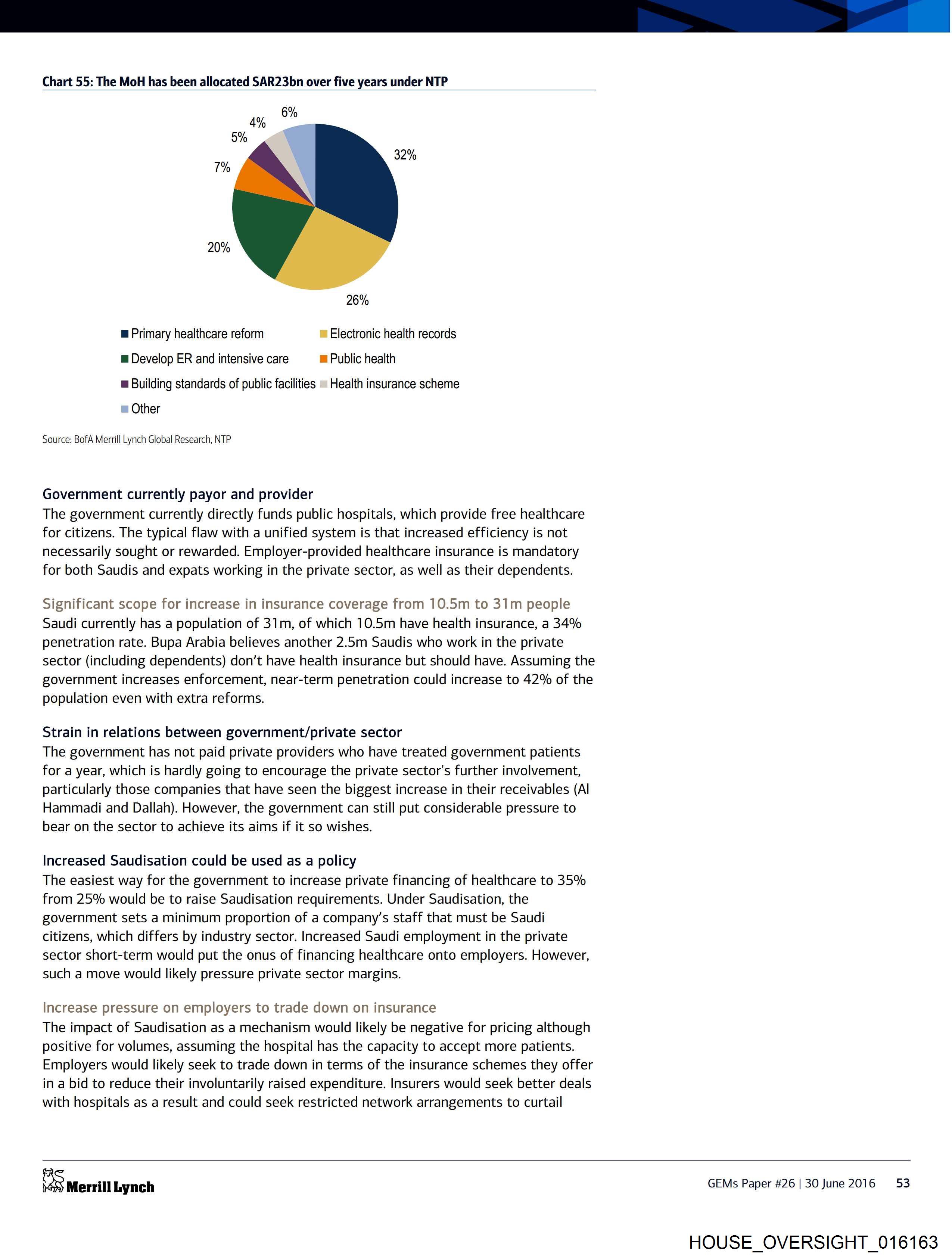
Chart 55: The MoH has been allocated SAR23bn over five years under NTP
20%
26%
m Primary healthcare reform = Electronic health records
m Develop ER and intensive care m Public health
m Building standards of public facilities = Health insurance scheme
Other
Source: BofA Merrill Lynch Global Research, NTP
Government currently payor and provider
The government currently directly funds public hospitals, which provide free healthcare
for citizens. The typical flaw with a unified system is that increased efficiency is not
necessarily sought or rewarded. Employer-provided healthcare insurance is mandatory
for both Saudis and expats working in the private sector, as well as their dependents.
Significant scope for increase in insurance coverage from 10.5m to 31m people
Saudi currently has a population of 31m, of which 10.5m have health insurance, a 34%
penetration rate. Bupa Arabia believes another 2.5m Saudis who work in the private
sector (including dependents) don’t have health insurance but should have. Assuming the
government increases enforcement, near-term penetration could increase to 42% of the
population even with extra reforms.
Strain in relations between government/private sector
The government has not paid private providers who have treated government patients
for a year, which is hardly going to encourage the private sector's further involvement,
particularly those companies that have seen the biggest increase in their receivables (Al
Hammadi and Dallah). However, the government can still put considerable pressure to
bear on the sector to achieve its aims if it so wishes.
Increased Saudisation could be used as a policy
The easiest way for the government to increase private financing of healthcare to 35%
from 25% would be to raise Saudisation requirements. Under Saudisation, the
government sets a minimum proportion of a company’s staff that must be Saudi
citizens, which differs by industry sector. Increased Saudi employment in the private
sector short-term would put the onus of financing healthcare onto employers. However,
such a move would likely pressure private sector margins.
Increase pressure on employers to trade down on insurance
The impact of Saudisation as a mechanism would likely be negative for pricing although
positive for volumes, assuming the hospital has the capacity to accept more patients.
Employers would likely seek to trade down in terms of the insurance schemes they offer
in a bid to reduce their involuntarily raised expenditure. Insurers would seek better deals
with hospitals as a result and could seek restricted network arrangements to curtail
2S Merrill Lynch
GEMs Paper #26 | 30 June 2016 53
HOUSE_OVERSIGHT_016163
Document Preview

Click to view full size
Document Details
| Filename | HOUSE_OVERSIGHT_016163.jpg |
| File Size | 0.0 KB |
| OCR Confidence | 85.0% |
| Has Readable Text | Yes |
| Text Length | 2,707 characters |
| Indexed | 2026-02-04T16:27:11.077100 |
Related Documents
Documents connected by shared names, same document type, or nearby in the archive.