HOUSE_OVERSIGHT_016418.jpg
Extracted Text (OCR)
zone. Officials in the Colorado town imposed an 18-month moratorium on almost all
development in its only census tract earmarked for the incentives.
The move highlights how local officials have the power to respond to criticisms of the
law—in this case, that investors may rush to build projects the community doesn’t want.
Boulder has long been a favorite spot for growing companies because people want to live
there, thanks to its college-town vibe and quick access to nature.
“People think we have too much” development, said Bob Yates, a council member. “We’re
not Detroit.”
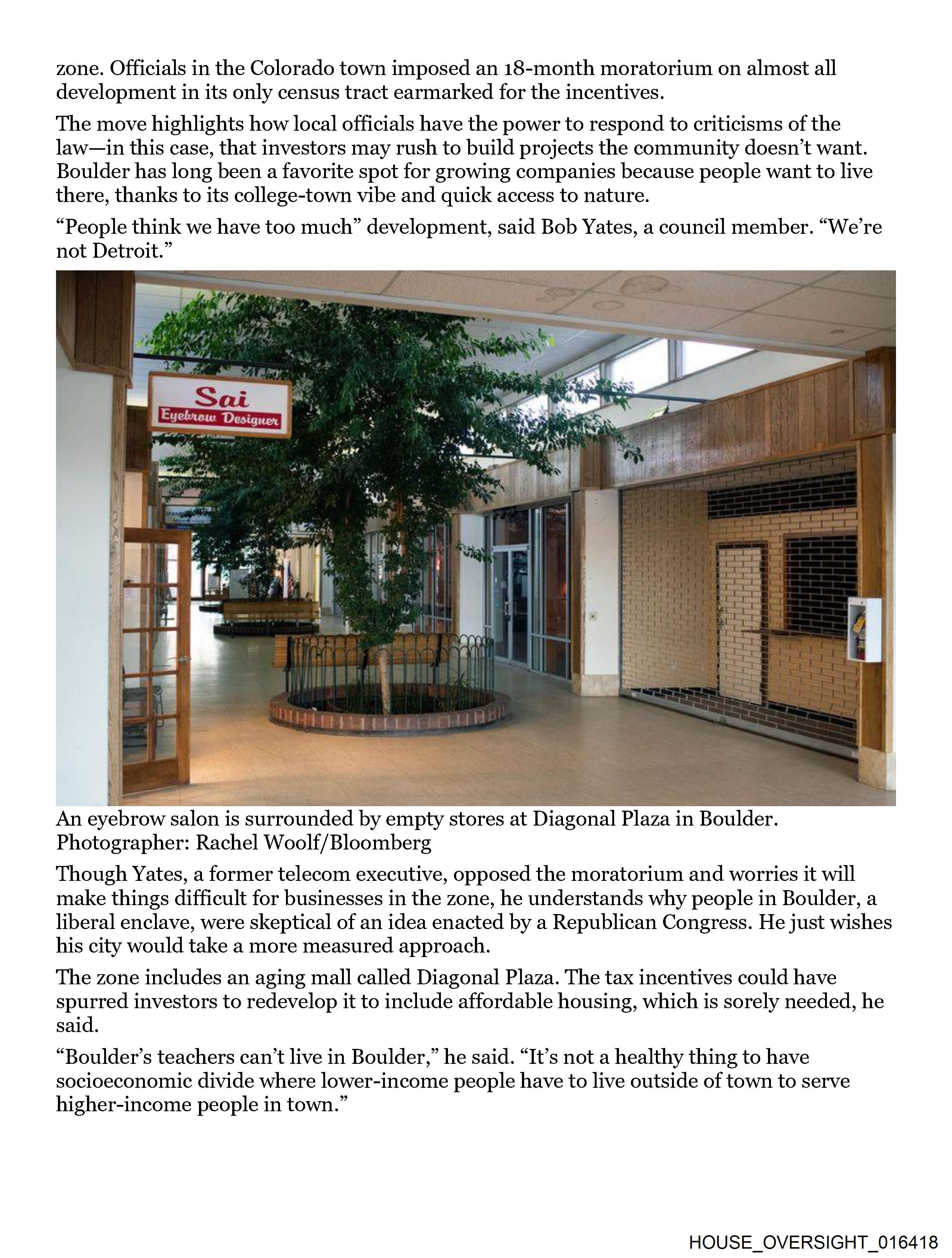
An eyebrow salon is surrounded by empty stores at Diagonal Plaza in Boulder.
Photographer: Rachel Woolf/Bloomberg
Though Yates, a former telecom executive, opposed the moratorium and worries it will
make things difficult for businesses in the zone, he understands why people in Boulder, a
liberal enclave, were skeptical of an idea enacted by a Republican Congress. He just wishes
his city would take a more measured approach.
The zone includes an aging mall called Diagonal Plaza. The tax incentives could have
spurred investors to redevelop it to include affordable housing, which is sorely needed, he
said.
“Boulder’s teachers can’t live in Boulder,” he said. “It’s not a healthy thing to have
socioeconomic divide where lower-income people have to live outside of town to serve
higher-income people in town.”
HOUSE_OVERSIGHT_016418
Document Preview

Click to view full size
Document Details
| Filename | HOUSE_OVERSIGHT_016418.jpg |
| File Size | 0.0 KB |
| OCR Confidence | 85.0% |
| Has Readable Text | Yes |
| Text Length | 1,422 characters |
| Indexed | 2026-02-04T16:28:03.757317 |
Related Documents
Documents connected by shared names, same document type, or nearby in the archive.